Health

Guyanese advocate Rae Andre Wiltshire is using his personal cancer journey to encourage others to prioritize their health while helping to break the stigma surrounding the disease.
In a heartfelt message, Wiltshire thanked everyone who has supported him through their prayers, words of encouragement, and acts of kindness. He also urged the public to use the available cancer screening services, emphasizing that early detection can save lives.
"All is well. God is in charge."
At NewsGuyana24, we join the many Guyanese wishing Rae Andre Wiltshire continued strength, healing, and good health.
Let this be a reminder to schedule your routine health and cancer screenings. Looking after your health today could make all the difference tomorrow.
By Donston Wilson | NewsGuyana24
November 17, 2025
Strength in the Face of Adversity
The WHO has unveiled a landmark roadmap — the “Integrated Drug Resistance Action Framework for HIV, Hepatitis B & C and STIs (2026–2030)” — aimed at curbing the growing threat of drug resistance worldwide. The plan warns that if urgent action is not taken, decades of progress made in controlling HIV, viral hepatitis, and sexually transmitted infections (STIs) could be undermined.
Why the Framework Matters
Drug resistance occurs when viruses, bacteria or other pathogens evolve in ways that make existing treatments ineffective. For conditions like HIV, hepatitis B & C, and STIs, this resistance can lead to treatment failure, higher infection rates, more severe illness, and increased death rates.
The new WHO framework proposes a unified, people-centred approach across five strategic areas:
- Prevention and response
- Monitoring and surveillance
- Research and innovation
- Laboratory capacity
- Governance and enabling mechanisms
This approach emphasizes antimicrobial stewardship, stronger national surveillance systems, equal access to high-quality prevention, diagnosis and treatment services, and building laboratory and public-health infrastructure capable of detecting and responding to resistance trends.
What Guyana Should Do — And Why It’s Urgent
For Guyana, the new WHO framework is a critical alert. As the country continues to expand healthcare access, especially in rural and remote regions, and as travel, migration, and social mobility increase, the risk of drug-resistant infections becomes more real.
Key steps Guyana’s health authorities should consider:
- Strengthening national surveillance for HIV, hepatitis and STIs to detect drug resistance early
- Ensuring quality control in treatment programmes — from effective medicines supply to correct prescription practices
- Enhancing public-awareness campaigns to promote adherence to treatment and discourage misuse of antimicrobials
- Expanding laboratory capacity for diagnostics and resistance testing, especially in regional and hinterland clinics
- Adopting governance and reporting systems aligned with global best practices
Authorities must also safeguard the privacy and dignity of patients, ensuring that stigma does not block people from accessing testing and care.
A Chance to Protect Gains — Before It’s Too Late
The WHO’s 2026–2030 framework is a global call to action, but its success depends on national implementation. For Guyana, this is a test of whether the country can translate international recommendations into meaningful local policy.
If we act now, investing in surveillance, labs, public education and equitable access, we can prevent resurgences of HIV, hepatitis, and STIs driven by drug resistance. If we delay, decades of progress could be reversed. With new treatments, stronger institutions, and community engagement, Guyana can heed the WHO warning and safeguard public health for generations to come.
By Donston Wilson | NewsGuyana24
November 17, 2025
WHO Launches Global Plan to Tackle Drug Resistance in HIV, Hepatitis and STIs — What It Means for Guyana
As Guyana joins the global community in observing World AIDS Day, new data reveal a troubling rise in infections nationwide. According to Health Minister Dr. Frank Anthony, Guyana recorded at least 449 new HIV cases in 2025, a surge he describes as “alarming and deeply concerning,” especially given that many of these infections were preventable.
Speaking at a national workplace policy forum at the Arthur Chung Conference Centre on Friday, Dr. Anthony highlighted the latest UNAIDS findings, which show that Guyana must urgently scale up testing, education, and prevention programmes to curb further spread.
Across the country, approximately 10,000 people are currently living with HIV, with a large percentage receiving treatment. The Minister emphasized that access to treatment not only improves health outcomes but also plays a crucial role in reducing the transmission of the disease.
However, the data reveal a worrying trend: young adults in their 20s now make up a significant share of new infections. Dr. Anthony stressed that this demographic shift underscores the need for targeted awareness campaigns, comprehensive sex-education initiatives, and easier access to testing and pre-exposure prevention tools.
As the world reflects on progress made and challenges ahead, Guyana’s message is clear: the fight against HIV is far from over, and renewed national commitment is essential to protecting the next generation.
NewsGuyana24 will continue to monitor and report on this developing public health story.
By Donston Wilson | NewsGuyana24
November 17, 2025
World AIDS Day: Guyana Records 449 New HIV Infections in 2025 — Health Minister Sounds Alarm
Food

IGEORGETOWN — A new food-import agreement between Antigua and Barbuda and Guyana aims to help curb rising grocery costs by importing fruits, vegetables and other produce from Guyanese suppliers at reduced rates. The initiative was confirmed following talks between Antigua’s leadership and Guyana during the recent COP30 Climate Conference
Under the deal, officials expect food prices in Antigua to ease once shipments begin, likely in early 2026, offering much-needed relief to households struggling with inflation and global supply-chain pressures. The agreement also follows Antigua’s approval to suspend its Common External Tariff (CET) on essential food items through mid-2026, as a broader effort to shield consumers from surging international food costs
For Guyana, the partnership presents an opportunity to expand its agriculture and export sectors, deepen ties within the CARICOM trade bloc, and support regional food security via intra-Caribbean trade. The move highlights how regional cooperation could offer real economic benefits, even as global market volatility continues to challenge small economies.
By Donston Wilson | NewsGuyana24
November 17, 2025
Antigua Partners with Guyana to Lower Food Costs — Regional Deal Could Ease Price Pressure


In Guyana, Christmas isn’t Christmas without black cake. Long before the tree goes up or the parang starts playing, households across the country begin the ritual of soaking fruits, creaming butter and sugar, and preparing the rich, aromatic dessert that has become the heart of our Guyanese holiday season.
Black cake isn’t just food — it’s culture, memory, and identity. Passed down through generations, it blends African, European, and Caribbean traditions into one distinct Guyanese masterpiece. Every family has its own version, its own “secret,” and its own story.
“For many households, the smell of black cake baking is the signal that Christmas has officially started,” one baker told NewsGuyana24. And across the diaspora, Guyanese abroad still fly home or ship cakes overseas to keep the tradition alive.
The signature ingredient? Soaked fruits — sometimes matured for months, even YEARS — blended with port wine, rum, and spices. The result is a dark, moist, rum-infused cake that tastes like celebration itself.
Beyond its flavor, black cake symbolizes togetherness. Families make it in batches, neighbors exchange slices, and workplaces share them as gifts. It’s a reminder that Guyana’s diversity shines brightest when people come together around food, tradition, and joy.
As one Georgetown grandmother put it:
“Christmas without black cake? Is like pepperpot without cow heel — it can’t work!”
Whether homemade or bakery-bought, Guyanese black cake is more than a dessert. It’s a national treasure — a timeless piece of who we are.
By Donston Wilson | NewsGuyana24
November 17, 2025
Why Guyanese Black Cake Remains the Must-Have Dessert Every Christmas
Travel


GEORGETOWN — The Government of Guyana has unveiled a sweeping new investment strategy aimed at transforming the country’s tourism sector into a major engine of growth. Announced by Irfaan Ali at the 2025 Tourism Awards and Gala, the plan signals a renewed push to turn Guyana’s natural beauty and ecotourism potential into real economic dividends.
Under the strategy, authorities plan to expand infrastructure and visitor capacity across the country. This includes constructing over 15 new hotels, upgrading waterfront areas, marinas, museums, and botanical gardens, expanding hinterland airstrips, and modernizing ferry services. The government also highlighted incentives for private investors and a coordinated system through entities like GoInvest and the Tourism and Hospitality Association of Guyana to ensure projects progress from concept to completion with support at every stage.
With visitor numbers already up about 18 % in 2025, the potential upside is real. But the new strategy also raises urgent questions: Can Guyana build, manage, and regulate rapid growth without losing the natural, sustainable character that makes it attractive? Will communities and hinterland regions benefit or be left behind? As the world turns its eyes to Guyana, the coming months will show whether the plan becomes a tourism success story, or another missed opportunity.
By Donston Wilson | NewsGuyana24
November 17, 2025
Guyana Launches Bold Tourism Investment Strategy — Can It Deliver the Boom?
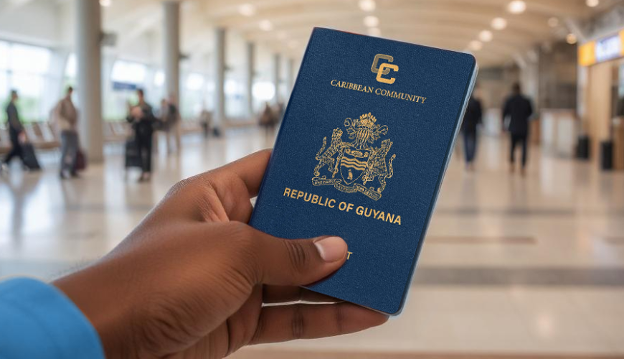
The Guyanese passport has quietly grown in strength over the past decade, giving citizens greater mobility, more global access, and increasing recognition on the international stage. While Guyana may be a small country, its passport now carries significant travel advantages in the Caribbean, the Commonwealth, and beyond.
Today, Guyanese passport holders enjoy visa-free or visa-on-arrival access to more than 90 countries, including CARICOM states, the United Kingdom (via special arrangements), and several emerging global markets. This places the Guyanese passport among the strongest in the region, outperforming several neighbouring South American nations.
What drives this growing influence?
International confidence in Guyana’s economic rise—powered by oil, tourism, and global investment—has strengthened diplomatic ties. As one regional analyst told NewsGuyana24, “Guyana’s passport power reflects its new position as an important player in the hemisphere.”
Guyanese also benefit from the CARICOM Single Market and Economy (CSME), which grants access to work, study, and establishment rights across many Caribbean nations. Combined with easier travel through the Schengen region and expanding partnerships with Asia and Africa, the passport opens doors for business, education, migration, and tourism.
But with increased global mobility comes responsibility. Experts warn that Guyana must continue strengthening security features, digital identity systems, and anti-fraud protections to maintain international trust. Losing that trust could weaken passport power overnight.
Still, for many citizens, the Guyanese passport remains a symbol of hope and opportunity.
“Thirty years ago, we couldn’t dream of traveling like this,” one Berbice resident said. “Now, the world feels closer.”
As Guyana’s influence grows, so too does the reach—and responsibility—of the little green (and soon digital) passport that continues to take Guyanese further than ever before.
By Donston Wilson | NewsGuyana24
November 17, 2025
The Power of the Guyanese Passport: More Influence Than You Think