Business

Nvidia — the world’s most valuable chipmaker and the driving force behind the global AI explosion — is set to release its highly anticipated quarterly earnings this week, with analysts expecting another massive surge in revenue powered by demand for AI chips used in data centres and generative AI systems.
According to The Guardian, Nvidia is projected to post US$54.9 billion in revenue for the quarter, a staggering year-over-year increase of more than 50 percent. The company’s dominance in AI hardware has made it a central player in the global tech economy and a key indicator of the health of the AI boom. However, despite the record expectations, investors are increasingly cautious. Major shareholders, including Japan’s SoftBank Group and billionaire investor Peter Thiel, have recently sold off large blocks of Nvidia stock, fueling speculation that the company may be nearing the peak of an overheated AI market.
Market analysts warn that Nvidia’s soaring valuation, which recently touched the US$5 trillion mark, could be threatened if AI demand slows or client spending begins to stabilize. For Guyana, Nvidia’s performance is another reminder of how global technology trends ripple across emerging markets. As Guyana seeks to attract investment, diversify beyond oil, and prepare for future digital infrastructure needs, shifts in the global tech landscape remain highly relevant. Nvidia’s earnings announcement is expected to set the tone for tech markets going into 2026 — and may offer the clearest signal yet of whether the AI boom is sustainable or running out of steam.
By Donston Wilson | NewsGuyana24
November 17, 2025
Nvidia Earnings in Focus as AI Boom Fuels Record Growth — But Fears of a Bubble Persist


When the Government proudly announced that Guyana has achieved “100 percent recovery of all overpayments” for three consecutive years, it was packaged as a victory, a sign that accountability is working and taxpayers’ money is safe. But here’s the uncomfortable truth:
Celebrating full recovery without addressing why overpayments happen at all is not accountability, it’s accounting gymnastics. The number looks good on paper. It sounds strong in a press release. But for a rapidly developing country managing billions in public contracts, the claim raises more red flags than reassurance. Recovery Is Not Reform — It’s Damage Control
Every overpayment recovered represents a failure somewhere along the chain of governance:
A contract wasn’t properly supervised.
A payment certificate wasn’t verified.
Documentation was missing.
An officer didn’t do their job — or wasn’t trained to do it.
A system meant to protect taxpayers simply did not work.
Fixing the mistake after the fact does not mean the system is functioning.
It means the system caught the problem late, after the public purse was already compromised. What the Government calls “100% recovery,” auditors call symptoms of structural failure.
The Biggest Problem: What We Aren’t Being Told
The announcement does not answer crucial questions:
How much was overpaid in total?
No year-to-year breakdown is provided.
Which ministries or contractors were responsible?
Silence. No transparency. No accountability.
Were any officers disciplined, suspended, or removed?
Not a word. Recovery without consequences only encourages repeat violations.
How many overpayments went undetected?
A 100% recovery rate only applies to the ones that auditors found.
We have no idea how many slipped through the cracks.
Why do the same issues appear in every Auditor General report?
Because the root problems remain untouched.
This is why experts describe the announcement as a “headline achievement masking a systemic weakness.”
A Modern State Can’t Run on Post-Mortem Auditing
Guyana is no longer a small, slow economy.
We are a rising oil power, handling multi-billion-dollar contracts at a pace the country has never experienced.
Yet our procurement and financial oversight systems still rely heavily on:
manual paperwork,
delayed audits,
fragmented oversight, and
outdated by-laws and regulations.
This is not how modern states operate.
Modern oversight means real-time monitoring, digital procurement transparency, and automated red flags — not discovering year-old errors and congratulating ourselves for correcting them.
The Real Threat: A Culture of No Consequences
Perhaps the most serious flaw is the absence of accountability.
If public officers know that overpayments will simply be “recovered later,” with no disciplinary outcome, then the system encourages carelessness — and worse, creates openings for corruption disguised as “honest mistakes.”
Recovery without reform emboldens the problem.
Guyana Needs Integrity, Not Illusions
The government’s claim of 100% recovery is not meaningless — but it is misleading when presented as evidence of strong management. What Guyana needs now is not celebration, but correction.
Real accountability requires:
full public disclosure of all overpayments and responsible parties,
real consequences for repeated breaches,
modern digital oversight,
regional capacity building, and
a shift from repairing errors to preventing them.
In a booming economy with expanding public spending, prevention is everything.
Recovery is a bandage — not a cure.
Guyana Cannot Build a Modern Future on Outdated Systems
If Guyana is serious about becoming a modern oil-driven state, then it must be serious about modernizing its financial systems.
We cannot celebrate cleaning the spill while ignoring the leak.
Until the government confronts the structural weaknesses that cause these overpayments,
the claim of “100% recovery” will remain what it is:
A comforting statistic masking an uncomfortable reality.
By Donston Wilson | NewsGuyana24
November 17, 2025
The 100% Recovery Myth: Why Guyana Shouldn’t Celebrate a Broken System
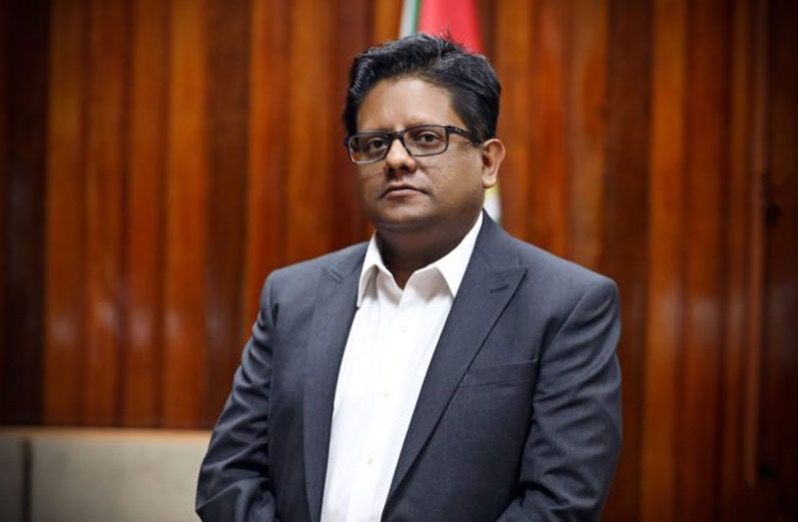
The Government of Guyana says it has intentionally constructed a macroeconomic framework capable of protecting the economy from the effects of volatile global commodity and oil prices. This, Finance Minister Dr Ashni Singh said, is central to ensuring long-term stability — even during periods of global economic turbulence.
Speaking on Wednesday, Dr Singh reminded that despite recent growth, Guyana remains “a small, open economy,” heavily reliant on primary commodities and therefore vulnerable to fluctuations in global markets. He stressed that the Government and its leadership — including President Irfaan Ali and Vice President Bharrat Jagdeo — have prioritized resilience as a guiding principle of economic policy.
“As a government, we have been careful to build structures and a macroeconomic framework that have sufficient resilience to withstand movements in oil prices,” Dr Singh said. He added that while higher oil prices would yield greater revenues, fiscal planning is not built on the assumption that prices will remain elevated indefinitely.
Economists and stakeholders are watching closely: the resilience doctrine outlined by government officials will soon be tested by global developments. With oil markets’ unpredictable swings and external economic pressures mounting, the robustness of these frameworks will matter for budget planning, public services, and national development.
Guyana’s 2025 mid-year economic report — released alongside the commentary — already points to strong non-oil sector growth and rising GDP, indicating that diversification and resilience may be working.
As Guyana moves toward Budget 2026, the government’s emphasis on stability, prudent planning, and global-market awareness could help cushion the country — but only if policies remain consistent.
By Donston Wilson | NewsGuyana24
November 17, 2025
Guyana’s Economic Safety Net: Government Says It Built a “Resilient Macroeconomic Framework”